Fishin Frenzy: the fishing is decoration, the paytable is the machine
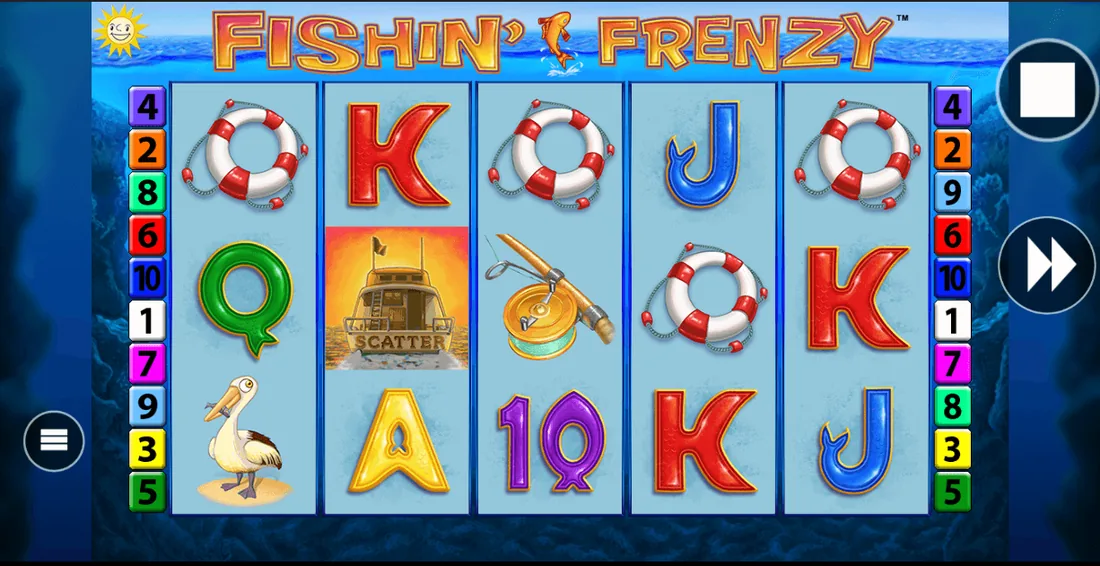
Here is what is not right with most pages about this game: they sell you the fishing. A cormorant, a bloke in a hat, a sunny lake — it reads like a hobby you could take up on a Sunday. What actually runs is a fixed-maths reel game, and by the time the stake leaves your balance the result is already settled. Nothing your thumb does afterwards changes it. The theme is decoration; the paytable is the machine.
So this is the version written for the cautious friend rather than the excited one. No predictions, no schemes against the RNG, no promises. Just how a round is shaped, where the return actually hides, what the controls do, and the mistakes that separate a cheap evening from an expensive one.
The part the artwork hides
Fishin Frenzy is a five-reel, three-row video slot from Blueprint Gaming, and for a lot of British players it is the first game they meet in the fishing-collect family — the one the lookalikes were built to imitate. The artwork suggests calm. The build is a rulebook: symbols weighted by a random number generator, a paytable that never shifts, and a return figure fixed at the factory.
That return figure is the first thing to find, and it is not on the promo banner. It sits behind the small information icon in the game menu. On most UK builds you will see something in the mid-nineties, but read it where you actually play, because builds differ between operators and markets, and a tenth of a percent compounds over a year of spinning.
The second thing is variance. This is a high-volatility design: long empty stretches are the normal state of the game, and most of the return is packed into the free-spins round. Anyone who judges a slot on twenty spins is judging nothing at all. The third is your stake ceiling, which is a legal fact rather than a design choice — £5.00 a spin in Britain, and £2.00 for players aged 18 to 24.
One spin, stake to collect
Strip the theme away and a round is short. There is no decision hiding inside it, which is the first thing crash-game players get wrong.
- Set the stake for a single spin. On a UK-licensed site the ceiling is £5.00, and £2.00 for players aged 18 to 24, so you cannot drift into the levels a high-roller build allows elsewhere.
- Press spin. The reels resolve, wins pay left to right along the fixed lines, and the amount lands in your balance straight away.
- Look for a collect button. There isn't one. Nothing here asks you to grab a win before it vanishes; the round settles itself and the money is already yours.
- Three or more scatters take you into the free spins, where the fisherman becomes the symbol that matters: he sweeps up the cash values printed on the fish around him.
- The only decision left is whether to spin again, and that is a bankroll question rather than a game one.
Because the round runs itself, the skill in this game sits entirely before the spin: choosing a stake in pence rather than pounds, and deciding in advance what you will do when the balance halves.
The multiplier is not a ladder
Players arriving from crash games expect a number that climbs while they watch it, plus a moment where they must snatch it before it collapses. This game does not pay that way, and waiting for the ladder to appear is how an evening disappears.
The multiplication here is spatial rather than progressive. The fish carry their own cash values on the reels; the fisherman is the wild who collects them. When he lands among fish during the free spins, those values are added together in one go. Growth comes from how many fish are on the board at the instant he appears — a busy screen is worth far more than a long session.
That is precisely why the bonus round carries the game's return and why the base game feels like a waiting room with a lake painted on it. Some builds in this family bolt a stepping multiplier onto the free spins; check the rules screen on the version in front of you instead of assuming it behaves like the one your mate plays.
Spinning by hand, and the autoplay question
The controls are four things: stake, spin, the information panel, and the sound. Open the information panel first. It holds the paytable, the line rules, the return figure and the maximum win, and it is the only honest description of the game on the whole site.
Autoplay catches people in two different ways. Most UK-licensed builds have stripped the free-running spin modes back or removed them, so what you get is manual spinning; if a build still offers a hands-off spin counter, that is a detail to check against the licence in the footer rather than a feature to trust with a deposit. Hand-spinning is not safer in itself, but it keeps you aware of the count, and the count is where the money goes.
When to stop gets asked as though there were a technical answer. There isn't. The workable version is dull: fix the number before the first spin, at a level you could lose without it changing your month, and leave when it is gone — and leave just as deliberately when a win takes you well past it. The game will be there tomorrow with the same return figure and the same empty spells.
Six beginner mistakes, priced
None of these are exotic. Each one is common, and each has a cost you can put in pounds.
| Mistake | What it actually costs |
|---|---|
| Raising the stake to chase the bonus | Stake scales turnover, not luck. Two hundred spins at £2.00 is £400.00 through the machine whatever the reels do. |
| Treating the return figure as a forecast for the evening | It is a long-run average over millions of spins. A 96% game can take a whole session and hand back nothing. |
| Hunting for a mid-round collect button | There isn't one. Time spent watching for it is time spent spinning at a stake you stopped thinking about. |
| Playing on a site with no licence number in the footer | Unlicensed sites are illegal to market here, and you give up the register check, the complaints route and GAMSTOP cover. |
| Using a credit card, or a card in someone else's name | Credit cards have been banned for gambling since 2020 and the payment method must be yours. Withdrawals freeze while that is unpicked. |
| Planning to withdraw the instant the first big win lands | The first payout is the slowest. Documents are checked before anything moves, and 24 to 48 hours is normal before Faster Payments even begins. |
Phone, demo, and where the money version sits
The game is built for a thumb. On a phone it runs in the browser in portrait, or through the operator's app if they have one — both app stores allow real-money gambling apps from licensed operators, so an app is not a red flag in itself and its absence is not one either. What matters is that the stake box stays visible and the balance stays on screen. If a build hides either, put it down.
Free play is the sensible first hour. Demo mode is common on UKGC sites, but many show it only to logged-in, age-verified accounts, so an empty demo button is usually a compliance setting rather than a fault. The demo uses the same reels and the same paytable; what it does not use is your money, which is exactly why the empty spells are easier to sit through there than in the paid version.
For real money, do the dull checks once. Match the licence number in the footer against the UKGC public register. Set a deposit limit before the first spin — affordability checks begin at £150 of net deposits a month and use credit-reference data at the first stage. You need to be 18 or over, and if you ever want a hard stop, one GAMSTOP registration blocks every licensed site for six months to five years. Withdrawals to an e-wallet take a few hours to a day, Faster Payments to a bank is same day to two working days, and debit card is one to three. Winnings are tax-free for you; the operator pays Remote Gaming Duty, raised to 40% in April 2026, which is why the maths behind the artwork is not generosity.
FAQ
Is Fishin Frenzy real, or one of the fake copies?
The game is a real slot from Blueprint Gaming, but «real» should mean licensed where you play it, not merely familiar. Every site serving British players needs a UKGC remote licence, so look the operator up in the public register and match the number printed in the footer. If those two things do not line up, the game is not the problem.
Can I use free play without opening an account?
Sometimes. Demo play is common on UKGC sites, but plenty of them only show it to logged-in, age-verified accounts, so you may have to register before the free version appears. The demo runs the same reels and the same paytable; only the balance is fiction.
Is there an app, and should I install an APK?
Both stores allow real-money gambling apps from licensed operators, so a proper app is entirely normal. An APK from a forum is not: sideloaded builds skip store review and the licence check that comes with it, and the file has access to your device. If the operator has an app, it will be in the store under their name.
Why is the first withdrawal so slow?
Identity and age checks come before any money moves, and documents are required before the first payout — 24 to 48 hours is the normal wait. After that, e-wallets take a few hours to a day, Faster Payments to a bank is same day to two working days, and debit card is one to three.